
Cybersecurity: Protecting your business and website
Back to the DBM Digital Day Koesio Conference
Cybersecurity
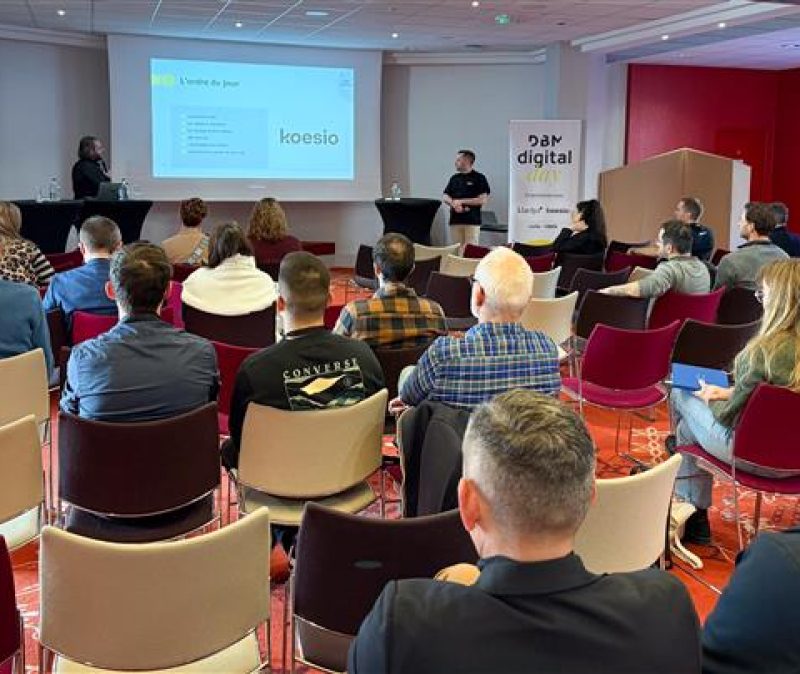
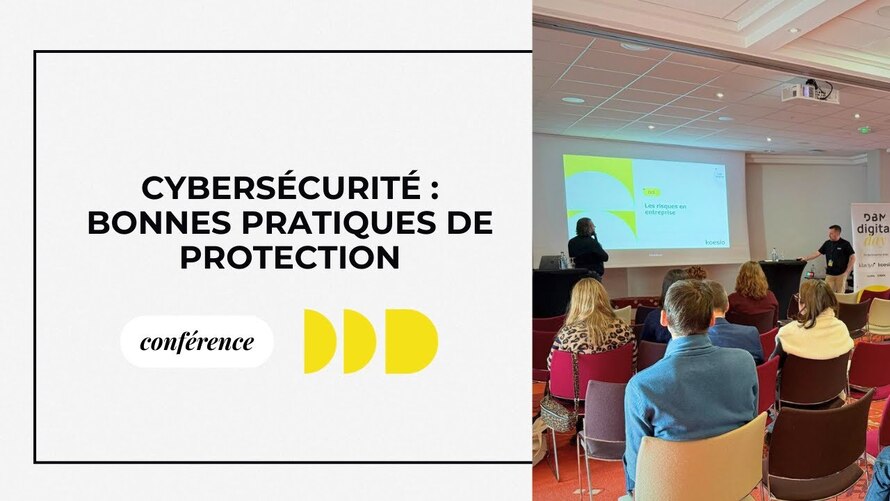
In 2026, cybersecurity is no longer a technical subject for the company: it is an issue of business continuity.Cyber attacks have intensified, automated tools are more powerful, and SMEs have become prime targets.During the DBM Digital Day, we animated with Koesio a conference dedicated to a central topic : how to effectively protect your business and website from current threats. According to the latest cybersecurity barometers of CESIN and the ANSSI, near 70% of managers say they perceive an increase in cyber risks to their business. The question is no longer whether if An attack will occur, but when and how to prepare for it.This article looks back at the key points of the conference, with a particular focus on the website security, the Data protection and Good practices essential for 2026.
2025: A year marked by faster and more automated cyber attacks
Cybercriminals now use AI-enabled tools to scan, infiltrate and exploit faults in minutes.Attacks are more numerous, faster and often invisible until too late.Strong trends observed in 2025:
- Mass automation of attacks : bots, scans, automated injections.
- Website compliance via vulnerable extensions or unupdated CMS.
- Data theft (clients, HR, billing) became the main target of attackers.
- Attacks on cloud environments and collaborative spaces.
- Human errors and bad configurations always leading the causes of incidents.
Unsecure website is today One of the most exploited entry points by cyber criminals.Major risks for businesses in 2026
- Website compliance: Code injection, malicious redirections, data theft… Attacks primarily target unupdated or misconfigured sites.
- Data flight or flight: Data has become the currency of cybercrime. A leak can result in GDPR sanctions, loss of confidence and a major financial impact.
- Automated attacks: Bots, brute force, vulnerability scans: these attacks rotate 24/7 and exploit the slightest fault.
- New generation Ransomware: Faster, more focused, able to encrypt cloud environments or poorly protected backups.
- Bad configurations: Access too permissive, lack of logging, untested backups… It is often these details that open the door to attack.
Good practices essential to secure its website in 2026
These simple actions form the basis for strong cybersecurity — and they are accessible to all businesses.
1. Update its website, plugins and CMS
In 2026, more than 60% of compromises came from known and uncorrected faults.
2. Save regularly (and test restorations)
Unusable backup is not a backup.Ideal: several copies, including one offline.
3. Secure Administrator Accesses
- Robust passwords
- Double authentication
- Limited administrative accounts
- Log of connections
4. Monitor website
Supervision allows rapid detection of:
- suspicious files
- abnormal behaviour
- attempted intrusion
- slowdowns due to bots
5. Raising awareness of risk prevention and cybersecurity
Cybersecurity is primarily a matter of behaviour.Training employees drastically reduces risks.Further: Strengthening data security in a sustainable way For companies wishing to go beyond fundamentals, several levers make it possible to significantly increase resilience:
- Website security audit
- Intrusion tests
- GDPR Compliance
- Ongoing monitoring
- Access and identity management
- Advanced backup policy
- Daily cyber support
The objective is not to be invulnerable — but be ready, protected and able to react quickly.
Koesio accompaniment: expertise and proximity
Koesio offers comprehensive support to help companies strengthen their security:
- Free cybersecurity audit
- Solutions adapted to your environment
- Expert support and daily support
- Continuity of activity in case of incident
DBM expertise: secure your digital presence
At DBM, we help companies protect their website and data:
- Website audit
- Fault correction and security hardening
- GDPR Compliance
- Preventive maintenance
- Protection against cyber attacks
- Regular monitoring and updates
Our mission: allow you to work calmlywith a secure, efficient and compliant website.Want to enhance the security of your website or company? Contact us
Learn more about cybersecurity in the company in 2026
How can a website be effectively secured in 2026?
The security of a website depends primarily on the rigorous management of updates: CMS, plugins, themes, server… each element can contain a exploitable flaw. At the same time, it is essential to put in place reliable and tested backups, strengthen admin accesses and regularly monitor the activity of the site. A combined approach drastically reduces the risks of intrusion and data leakage.
Why are SMEs particularly targeted in 2026?
SMEs are an ideal target for cyber criminals: they handle sensitive data but often have more limited means of protection than large companies. Attacks are now largely automated, allowing attackers to test thousands of sites continuously. An underprotected SME becomes an easy and profitable opportunity for cyber criminals.
What are the signs that a website has been hacked?
A compromised site may have several symptoms: unusual slowdowns, redirections to unknown pages, appearance of suspicious files or Google alerts indicating dangerous content. Sometimes the attack is invisible and manifests itself by massive spam sending from the server or by a sudden drop in the SEO. As soon as doubt arises, a technical analysis is required.
How to avoid a data leak?
Prevention involves a combination of good practices: secure access, encryption of sensitive data, regular updates and strict control of permissions. Sensitizing teams to the risks of data manipulation and human error is also crucial. A robust safeguard policy finally helps to limit the impact in the event of an incident.
What if my website has been compromised?
The first step is to isolate the site to prevent the attack from spreading or causing further damage. A full analysis must then be conducted to identify the origin of the intrusion, remove the malicious files and fix the exploited faults. Restoration from a healthy backup may be necessary, followed by an overall strengthening of safety to avoid recurrence.
Can DBM help me verify and ensure the security of my website?
Yes, DBM supports companies in the full security of their digital presence. This includes site audit, fault correction, configuration hardening, GDPR compliance and preventive maintenance. We also provide regular monitoring to quickly detect anomalies and ensure a sustainable level of safety.
D'autres (DBM News, Maintenance and security)
Discover the news